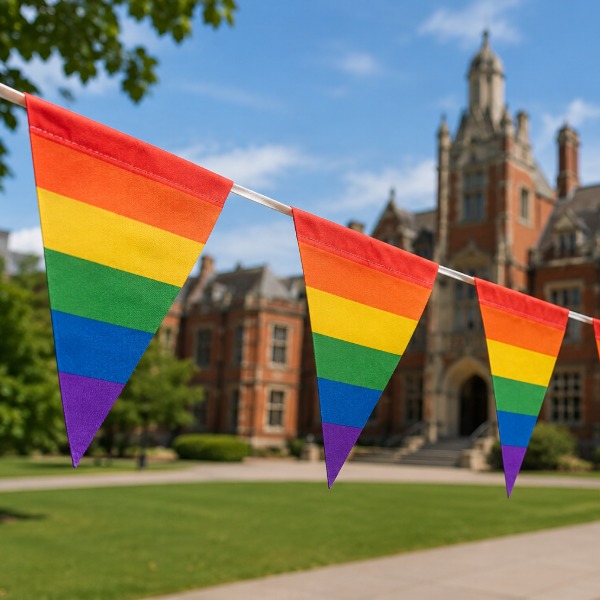
Pride merchandise for businesses includes branded promotional products, apparel, flags and sustainable giveaways designed to support and celebrate LGBTQ+ inclusion during Pride Month and beyond. Common items include:
When designed authentically and aligned with company values, Pride merchandise can support employee engagement, event visibility, and meaningful community partnerships.
In the 1960s, homosexuality was still criminalised in much of the Western world. In England and Wales, sex between men remained illegal until the Sexual Offences Act 1967 partially decriminalised consensual acts in private for men over 21. Scotland and Northern Ireland did not follow until 1980 and 1982. Even after 1967, LGBTQ+ people faced ongoing police scrutiny and unequal treatment under the law. One well-known case was that of Alan Turing, who was convicted in 1952.
In the United States, same-sex relationships were illegal in most states. Police frequently raided gay bars, arrested patrons and in some cases, newspapers published the names of those detained. The consequences were severe and could include:
Against the social and legal discrimination, venues like the Stonewall Inn in New York City became rare spaces for those in the LGBTQ+ community.
In the early hours of June 28, 1969, police raided the Stonewall Inn. Though raids were common, patrons resisted.
What began as a routine raid escalated into six days of protest between LGBTQ+ individuals and law enforcement. The uprising inspired a new wave of activism and visibility.
This uprising marked a turning point in public resistance.
One year after the Stonewall Uprising on the same date, a Liberation Day march was held in New York to commemorate the events of Stonewall. Marches were also held in Los Angeles and Chicago. These were widely considered the first Pride marches.
Pride Month takes place in June to honour the anniversary of the Stonewall Uprising. Over time:
In the United States, June was officially recognised as Pride Month in 1999. Since then, many countries have also adopted June as their primary celebration period for Pride.
Although the Stonewall Uprising was over 50 years ago, its impact continues to shape modern Pride celebrations and LGBTQ+ rights movements today. Pride did not begin as a marketing opportunity; it began as a protest demanding visibility and equality.
For brands, this distinction matters. The global LGBTQ+ community represents an estimated $3.7 trillion in annual purchasing power.
Pride is not solely a celebration; it remains connected to the ongoing civil rights issues affecting LGBTQ+ communities across the world. Understanding this history is essential before launching any Pride-focused campaign. Audiences have become increasingly aware of performative marketing. Simply changing a logo to a rainbow variation during June is no longer enough.
Brands that understand Pride’s origins are better positioned to create campaigns that feel considered rather than opportunistic, reducing the risk of backlash and ensuring messaging is audience-led rather than brand-led.
Before launching any Pride campaign, brands should start by looking inward. If external messaging does not reflect company values, audiences will quickly recognise this disconnect.
Start by reviewing your diversity, equity and inclusion policies. Do they actively support LGBTQ+ employees? Are inclusive practices part of recruitment, workplace culture and leadership representation?
Your Pride messaging should be a natural extension of these commitments, not just a seasonal overlay. Research shows that 76% of job seekers consider workplace diversity an important factor when assessing employers, highlighting why visible and authentic inclusion matters.
For universities and public sector organisations, Pride campaigns can also align with sustainable procurement policies and framework compliance requirements.
If your organisation does not yet have a clear DEI framework, this could be created before launching any Pride-themed campaigns. Without the basis of genuine inclusion, external activity can appear performative rather than supportive.
When company values and Pride marketing are aligned, campaigns will feel authentic.
Updating your brand’s logo with a rainbow variation during June is not wrong; on its own, it is rarely enough. Without a broader campaign grounded in understanding and action, the gesture comes across as surface-level.
This is where “rainbow-washing” comes into play, like “green-washing” in sustainability marketing. Rainbow washing occurs when a brand publicly references Pride without demonstrating a tangible impact.
64% of consumers worldwide say they choose, switch, avoid, or boycott brands based on their stance on societal issues. (Source: Edelman Trust Barometer)
Meaningful Pride engagement doesn’t need to be complex, but it does need to be intentional:
Now onto the exciting bit, branded merchandise!
When designed thoughtfully, custom Pride merchandise and branded LGBTQ+ promotional products can reinforce your campaign messaging and demonstrate visual support. The key is to ensure the products reflect authenticity, inclusivity and quality rather than simply applying a plain rainbow logo.
At Allwag, we have supported Pride campaigns across universities, corporate brand and public sector organisations. Each campaign is different, but the principles remain the same: considered design with clear messaging.
Popular Pride merchandise ideas for businesses:
For brands prioritising sustainability, products such as the Rainbow 180gsm Recycled Cotton Tote Bag (5L) provide practical, reusable visibility while aligning with environmental responsibility.
73% of Gen Z consumers say they are willing to pay more for sustainable products (First Insight / Deloitte)
Recycled and eco-conscious merchandise adds credibility to Pride campaigns, particularly when paired with charitable initiatives.
Remaining one of the most recognisable symbols of Pride, flags are a key merchandise item. More than 1,000 Pride events now take place annually across the UK, Europe and North America alone. Flags work well for:
Clothing is one of the most effective forms of Pride merchandise. From T-shirts and hoodies to accessories and corporate gift packs, promotional apparel allows brands to visibly participate in Pride events while promoting inclusion within their organisation. Key considerations include:
When selecting a Pride merchandise supplier, consider:
Working with an experienced branded merchandise supplier like Allwag Promotions ensures your Pride campaign aligns with both your values and your operational requirements.
Apparel, reusable bags, flags, drinkware and branded event accessories, Pride flags, reusable water bottles, lanyards, badges and sustainable giveaways remain among the most popular Pride merchandise choices for corporate campaigns and university events.
Businesses should align campaigns with internal DEI policies, support LGBTQ+ organisations financially or through partnerships, and ensure messaging reflects year-round inclusion rather than seasonal marketing.
Yes, when campaigns are authentic, respectful, and ideally linked to charitable contributions or internal inclusion initiatives.
Yes. Recycled cotton totes, organic apparel, FSC-certified print materials and plastic-free packaging all align Pride campaigns with environmental responsibility.
Creating a Positive Impact: Our 2025 Impact Report
Explore Allwag Promotions’ 2025 Impact Report and our commitment to carbon reduction, responsible sourcing and sustainable product innovation.
Sustainable Promotional Clothing: The Complete Guide to Eco-Friendly Branded Apparel
Explore our complete guide to sustainable promotional clothing. Learn about recycled materials, organic cotton, and how eco-friendly apparel benefits your brand.
![]() |
THIS IS A TOAST |
![]() |
THIS IS A TOAST |